Travel eSIM
eSIM for Travel: How to Stay Connected Abroad in 2026
A travel eSIM is a downloadable digital data plan that connects you abroad without a physical SIM. Learn what to verify before buying.
- Author
- RoamMatch editorial team
- Reading time
- 7 min read
- Updated
- Updated 2026-06-29
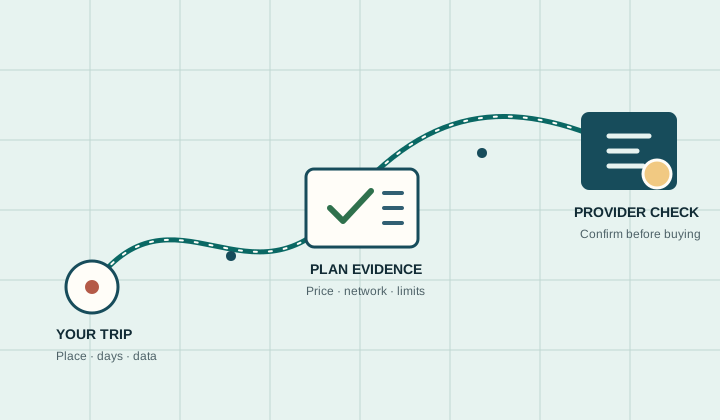
In brief
A complete guide to choosing an eSIM for travel: coverage, hotspot support, pricing, and how to compare verified plans before your next trip.
More than 3.6 billion devices worldwide now support embedded SIM technology, and travelers are among the fastest groups to adopt it. The reason is simple: arriving in a new country with a working data plan already installed removes one of the most stressful parts of any trip. To get this decision right, our guide on how to choose a travel eSIM walks you through the criteria that actually matter.
Choosing the right eSIM for travel is no longer a niche concern reserved for digital nomads. According to Business Research Insights, the global travel eSIM market was valued at 1.75 billion dollars in 2026 and is projected to reach 4.06 billion dollars by 2035. The following sections explain what a travel eSIM is, how to evaluate plans, and what to verify before you pay.
What a Travel eSIM Actually Does
An eSIM is an embedded, reprogrammable chip already built into most recent smartphones. Instead of inserting a plastic card, you download a carrier profile directly to your device. For travelers, this means you can purchase a data plan for your destination, install it at home, and have it activate automatically when you land.
The practical benefit is flexibility. You keep your home number active for calls and texts while a separate travel data plan handles internet access. This dual-profile setup lets you use maps, messaging apps, and mobile banking abroad without losing access to your primary line.
Adoption is accelerating quickly. The broader embedded SIM market is projected to grow from 2.12 billion dollars in 2026 to 7.62 billion dollars by 2034, driven heavily by consumer demand for borderless connectivity. Travel is one of the clearest everyday use cases for the technology.

Coverage, Networks, and Why the Local Partner Matters
Not every eSIM performs equally in every country. A travel eSIM is only as reliable as the local network it connects to, and regional plans sometimes use a different partner network than country-specific plans. This is why two plans covering the same destination can deliver very different speeds.
Coverage gaps remain a real limitation. Remote regions often have either limited or expensive options, and full-time travelers frequently report needing a local provider in places where international eSIMs do not reach. Before purchasing a regional or global plan, you should confirm that every country on your itinerary is genuinely included.
This is precisely where verified evidence helps. Rather than guessing which network powers a plan, our best travel eSIM options comparison shows network information with labeled uncertainty, so you understand what is confirmed and what still needs checking. For multi-country trips, our guide on international travel with an eSIM covers full-itinerary validity in detail.
Hotspot, Tethering, and Fair-Use Limits
If you plan to work while traveling, hotspot support is a make-or-break feature. Many travelers rely on tethering to connect a laptop for video calls when hotel Wi-Fi proves unreliable. However, not every eSIM permits hotspot use, and some that do impose strict daily caps.
The word "unlimited" also deserves scrutiny. Most unlimited plans apply a fair-use threshold, typically offering a set amount of high-speed data per day before throttling speeds. Some providers cap hotspot data far more aggressively than general browsing, occasionally to a fraction of a gigabyte per day, which can disrupt remote work.
Because these limits are buried in the fine print, comparing them side by side is essential. The table below summarizes how leading options handle data and throttling, with RoamMatch included for reference.
| Provider | Coverage | Plan structure | Throttling / fair use |
|---|---|---|---|
| RoamMatch matcher | Verified destination records | Compares verified plans across provider profiles | Limits shown with source verification before checkout |
| Airalo | 200+ destinations | Local, regional, and global plans | Possible on unlimited plans |
| Holafly | 200+ destinations | Unlimited plans | Depends on the data provider |
| Saily | 200+ destinations | Country, regional, and global | After daily threshold on unlimited plans |
To match these variables to your actual usage, the RoamMatch matcher ranks providers by destination, trip length, data habits, hotspot needs, and budget. It is built to separate plan fit from coverage and pricing evidence, so you review the limitations before leaving the site.
How Much a Travel eSIM Costs
Pricing varies by region and duration, but travel eSIMs are consistently cheaper than international roaming through a home carrier. Entry plans for Europe, the United States, or Asia often start at a few dollars for short durations, while five-day unlimited plans tend to begin near nineteen dollars. Africa and remote destinations generally cost more.
The financial pressure on traditional carriers reflects this shift. The travel eSIM segment expanded from 585 million dollars in 2025 to roughly 710 million dollars in 2026 by one industry forecast, as travelers abandon expensive roaming for digital-first plans. Avoiding those legacy charges is exactly the goal; our guide on how to avoid roaming charges with eSIM explains the savings in practice.
That said, the cheapest plan is rarely the best plan. A low price means little if the plan lacks hotspot support, throttles aggressively, or excludes a country on your route. Evaluating fit against price, rather than price alone, protects you from paying twice.
Compatibility and Installing Before You Travel
Before buying anything, confirm your phone supports eSIM and is not carrier-locked. Most modern iPhones and many Android flagships qualify, but device compatibility is not universal. According to Verified Market Reports, only about half of global smartphones were eSIM-compatible as of 2026, which remains a genuine adoption barrier.
Once you confirm compatibility, install the plan at home. Most eSIMs let you download and configure the profile in advance, even though the data does not begin counting until you reach your destination. If the connection does not start automatically on arrival, toggling Airplane mode usually resolves it.
Preparing ahead avoids scrambling for Wi-Fi the moment you land. Our guide on how travel eSIMs work details the setup flow so activation goes smoothly when you arrive.
What to Verify Before You Pay
The travel eSIM space moves fast, and plan details change frequently. Outdated prices, unconfirmed network partners, and vague fair-use terms are common sources of frustration. The most reliable approach is to check evidence rather than marketing claims.
Three things deserve verification every time: that your full itinerary is covered, that hotspot use is permitted at a usable allowance, and that the advertised price is current. Confirming these before checkout saves you from discovering a limitation only after landing, when fixing it is far harder.
Choosing With Confidence
The shift toward digital connectivity is no longer speculative. With the travel eSIM market reaching roughly 1.75 billion dollars in 2026 and projected to more than double within a decade, the technology has become a standard part of international travel rather than an experiment. Selecting the right travel eSIM comes down to matching coverage, hotspot support, fair-use limits, and price to your specific trip.
The smartest decision is rarely the cheapest one; it is the one verified against real plan data before you commit. By showing fit reasons, network information, and source checks with labeled uncertainty before you ever visit a provider, RoamMatch removes the guesswork that leads to costly surprises abroad.
Frequently Asked Questions
Will a travel eSIM work in remote destinations?
Coverage in remote regions can be limited or costly, as international eSIMs depend on local network partners. For such areas, a local provider purchased on arrival is sometimes more reliable, so always confirm coverage before purchasing.
Can I use a personal hotspot with a travel eSIM?
Many travel eSIMs support hotspot tethering, but not all do, and some cap hotspot data heavily. RoamMatch compares hotspot permissions and fair-use limits across providers so you can confirm support before you buy.
Is a travel eSIM cheaper than roaming?
In nearly all cases, a travel eSIM costs far less than international roaming through your home carrier. A local physical SIM may still be cheaper for very long stays in a single country.
Continue the decision
Best eSIM for International Travel: Plans, Data, and Coverage
This page consolidates international-travel eSIM variants and keeps similar articles pointed toward one stronger destination for the main keyword.
Open this topic hubRelated reading