International travel
eSIM for International Travel: A Complete 2026 Guide
A travel eSIM is a digital SIM that delivers mobile data abroad without swapping cards. Compare coverage, hotspot rules, fair-use limits, and provider evidence before buying.
- Author
- RoamMatch editorial team
- Reading time
- 7 min read
- Updated
- Updated 2026-06-29
In brief
Planning an eSIM for international travel? Compare data plans, coverage, hotspot rules and fair-use limits to stay connected abroad with confidence.
Connectivity is now treated as a travel essential, ranked alongside a passport and a boarding pass. The question for most travelers is no longer whether to use a digital SIM, but which plan actually fits the trip. Before you leave, it is worth knowing exactly how to set up and use an eSIM for international travel so that you land already connected.
Choosing an eSIM for international travel has shifted from a niche tech decision into a mainstream purchase, yet the options remain confusing. Coverage, hotspot permissions, fair-use caps, and multi-country validity vary widely between providers. According to a market forecast, the travel eSIM sector is expanding from $585 million in 2025 to about $709 million in 2026. This guide explains how the technology works and how to select a plan with confidence.
Why eSIMs have become the default for travel data
A decade ago, staying connected abroad meant hunting for a physical SIM card at an airport kiosk or accepting a costly daily roaming fee. The embedded SIM removed that friction. You download a profile electronically, keep your home number active, and connect the moment you arrive at your destination.
The hardware shift accelerated adoption. After Apple released eSIM-only iPhones in the United States, the digital format moved from optional to mandatory for millions of devices. Device availability followed quickly: Statista figures show the number of eSIM-compatible consumer devices reached 231 in 2023, up 45 percent year over year, while nearly 400 network operators offered eSIM services worldwide.
For the traveler, the appeal is practical. A single travel eSIM can cover multiple countries, eliminating the hassle of buying a new card at each border. It is also far cheaper than a legacy carrier international add-on. The trade-off is that not every plan behaves the same way once you are on the ground, which makes the selection process matter more than the brand name on the box.

How an eSIM works and what to verify first
An eSIM is a reprogrammable chip built into your phone. Instead of inserting plastic, you scan a QR code or activate a profile through an app, and the carrier settings load remotely. Most modern phones support dual SIM, so your home number can handle calls and texts while the eSIM carries mobile data abroad.
Before purchasing, three checks prevent the most common problems:
- Device compatibility. Confirm your phone supports eSIM and is carrier-unlocked. On most handsets, the cellular settings menu reveals whether an eSIM can be added.
- Destination coverage. A regional or global plan must list every country on your itinerary. A plan sold for one market may not work one border away.
- Local network quality. An eSIM is only as good as the local partner network it connects to, and the network on a regional package can differ from a country-specific one.
That last point is where many travelers are caught out. To reduce surprises, it helps to check local network compatibility for your eSIM before you commit, rather than discovering weak service after arrival.
Travel eSIM, roaming, or a local SIM?
There is no single right answer; the best approach depends on trip length, the number of countries, and how heavily you use data. The table below compares the three common routes using realistic considerations.
| Approach | Typical cost | Setup | Best suited for |
|---|---|---|---|
| Travel eSIM | Low to moderate; plans from a few dollars | Install before departure; activates on arrival | Short trips, multi-country itineraries, travelers who want data ready on landing |
| International roaming | High; often a daily fee | Automatic with home plan | Very short trips where convenience outweighs cost |
| Local physical SIM | Lowest per gigabyte in many regions | Bought on arrival; may require ID | Long stays in a single country |
For most international trips, a travel eSIM strikes the balance between price and convenience. Roaming is the most expensive path, while a local SIM tends to win only for extended single-country stays. If you are weighing the first two, our breakdown of travel eSIM versus roaming for international trips walks through the decision in detail.
Evidence first: verifying coverage, hotspot, and fair-use limits
The word "unlimited" hides the most important detail in any plan. Nearly every unlimited offer includes a fair-use limit, typically three to five gigabytes of high-speed data per day, after which speeds are throttled. For travelers who rely on tethering, the trap is sharper still: some plans cap hotspot use far below the headline allowance, or restrict it entirely.
This is exactly why an evidence-first approach matters. Demand for these plans is rising fast; market researchers at IMARC project the broader eSIM market to grow at a 14.57 percent compound annual rate through 2034, with international travel cited as a core driver. As the market expands, so does the volume of unverified pricing and outdated coverage claims.
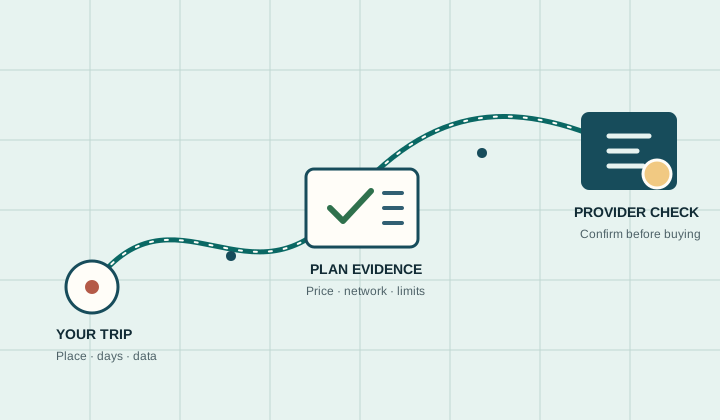
RoamMatch was built to address precisely this gap. We rank providers with fit reasons and show coverage evidence, data freshness, limitations, and source verification before you visit a provider. When local-network information cannot be confirmed, we label the uncertainty instead of guessing. To compare options this way, start with our best travel eSIM options and review the evidence before checkout.
Data plans, hotspot, and multi-country itineraries
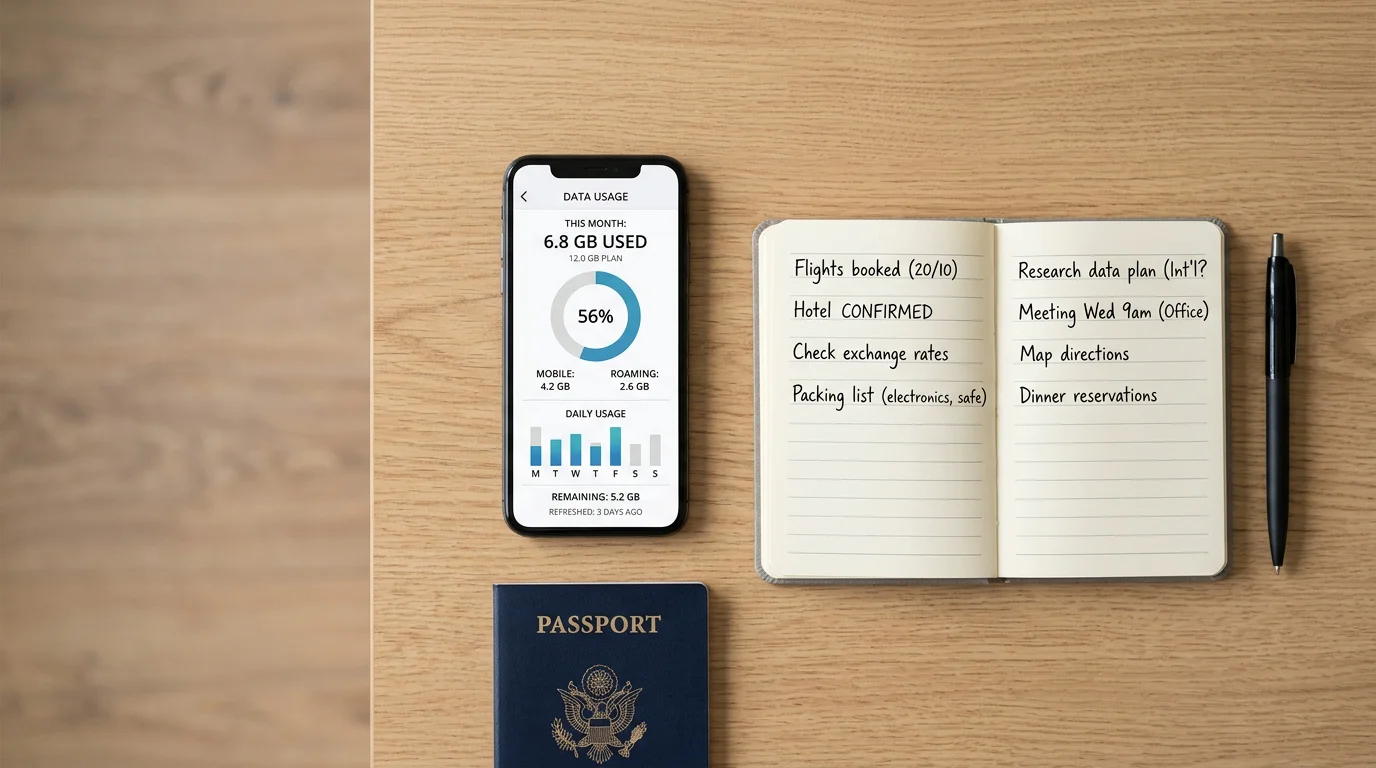
Matching the plan to real usage is the difference between a smooth trip and a frustrating one. A light user checking maps and messaging apps needs very little; a remote worker running video calls over a personal hotspot needs both volume and reliable tethering permission.
Consider these factors before you buy:
- Realistic data volume. Estimate daily use, then add a margin for navigation and unexpected downloads.
- Hotspot and tethering. If you work while traveling, confirm tethering is allowed and check any separate hotspot cap.
- Multi-country validity. For itineraries crossing several borders, a regional plan with a shared allowance avoids juggling profiles.
- Plan duration. Match validity to your trip length so you neither run short nor waste days.
The overall market continues to expand around these needs. A Grand View Research analysis values the global eSIM market at $12.8 billion in 2026, up from $11.9 billion in 2025, with connectivity services as the dominant segment. More choice is welcome, but it raises the cost of picking poorly. If you would like a structured way to weigh these variables, our guidance on choosing the right travel eSIM separates plan fit from coverage and pricing evidence so the comparison stays honest.
Setting up your eSIM the right way
Installation is straightforward, but timing matters. Install the profile while you still have reliable Wi-Fi at home, not after you land in an unfamiliar terminal. Most providers let you download the eSIM days in advance, with the data plan activating only once you reach your destination.
After installation, open your cellular settings and confirm the eSIM is selected for data while your home line stays active for calls. If the connection does not appear automatically on arrival, toggling airplane mode off and on usually prompts the network to register. Keeping the setup completed before departure removes the single most common source of arrival-day stress.
Frequently Asked Questions
Will an eSIM work in every country I visit?
Not automatically. Coverage depends on the specific plan and the local partner networks it uses. Always confirm that every country on your itinerary is listed, and verify network quality for that destination before purchasing.
Can I use a travel eSIM as a hotspot?
Often, but not always, and limits vary widely. Some plans restrict tethering or cap hotspot data well below the main allowance. RoamMatch comparisons surface hotspot permissions and fair-use limits so you can confirm support before you buy.
Is a travel eSIM cheaper than roaming?
In most cases, yes. International roaming through a home carrier typically costs far more than a dedicated travel eSIM. A local physical SIM may be cheaper still, but mainly for long stays in a single country.
Staying connected abroad without the guesswork
The fundamentals are simple: confirm your device is compatible, match the plan to your real data and hotspot needs, and verify coverage for every destination on your route. With the travel eSIM market approaching $709 million in 2026, the volume of plans, and of unverified claims, will only grow, which makes disciplined comparison more valuable than ever. Choosing an eSIM for your international trip should rest on evidence, not marketing. That is the entire point of the RoamMatch approach: transparent, source-checked recommendations that show you what to verify before you ever reach a provider checkout.
Continue the decision
Best eSIM for International Travel: Plans, Data, and Coverage
This page consolidates international-travel eSIM variants and keeps similar articles pointed toward one stronger destination for the main keyword.
Open this topic hubRelated reading