Travel eSIM
Best eSIM Cards for International Travel
Learn how to evaluate best esim cards for international travel with coverage, data, hotspot, price, source evidence, and setup checks before you travel.
- Author
- RoamMatch editorial team
- Reading time
- 3 min read
- Updated
- Updated 2026-06-30
In brief
A practical RoamMatch guide to best esim cards for international travel, with sources, plan checks, comparison criteria, and travel eSIM FAQs.
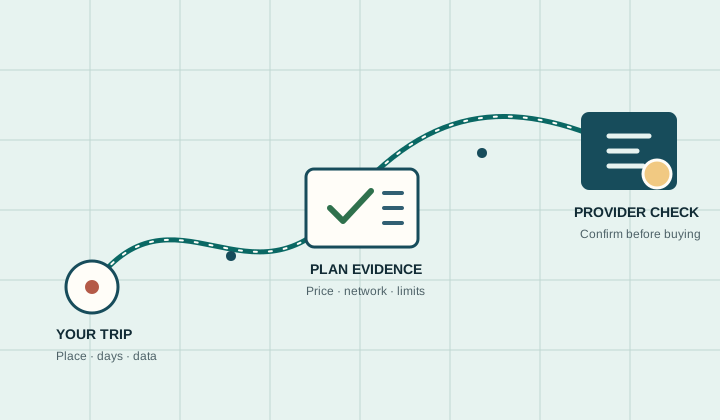
Best eSIM Cards for International Travel is a search with real purchase intent: travelers want mobile data that works abroad without roaming surprises. The safest way to choose is to compare the plan against the trip, not just against another brand. RoamMatch uses destination, trip length, expected data use, hotspot needs, buying priority, and source evidence to explain why one option fits better than another.
The market is large enough that travelers now face too many choices rather than too few. Business Research Insights values the travel eSIM market at about 1.75 billion dollars in 2026, while GSMA explains the underlying eSIM standard used for remote SIM provisioning. That growth makes source checks more important, because prices, countries, and fair-use rules can change quickly.

Best Use Case
The best use case for best esim cards for international travel is to compare travel eSIM cards by destination and data. If your trip includes more than one country, verify every destination in the country list. If you need laptop connectivity, hotspot permission should be treated as a requirement rather than a bonus.
What to Compare Before You Buy
- Coverage: Check the exact countries, not only regional marketing language.
- Data structure: Fixed data, unlimited, pay-as-you-go, and subscription plans behave differently.
- Hotspot: Some plans allow tethering freely, while others restrict it.
- Activation: Install on reliable Wi-Fi before departure whenever possible.
- Source freshness: Confirm final price and terms on the provider page before checkout.
Comparison Table
| Decision factor | Why it matters | RoamMatch check |
|---|---|---|
| Destination match | A cheap plan is useless if one stop is excluded. | Country and route fit |
| Data allowance | Maps, video, work calls, and hotspot have different needs. | Light, moderate, or heavy use |
| Plan limits | Unlimited plans often throttle after fair-use thresholds. | Restrictions and hotspot policy |
| Provider evidence | Network and price claims should be traceable. | Provider profile and source status |
Recommended Next Step
Use this page as a planning layer, then continue with the most relevant RoamMatch comparison. For a broad provider review, open RoamMatch provider profiles. For destination-led decisions, start with destination eSIM pages. For price and feature checks, compare travel eSIM prices and features.
Frequently Asked Questions
Is best esim cards for international travel always the cheapest option?
No. The cheapest option depends on destination, trip length, data volume, and whether you need hotspot or a phone number. A low price can become poor value if coverage is weak or throttling starts early.
Should I install the eSIM before departure?
Yes. Installation usually requires internet access, so it is safer to install while you still have reliable Wi-Fi. Keep the travel eSIM off until arrival if the provider recommends activation on first network connection.
Can I keep my home number active?
Usually yes on dual-SIM phones. Keep your home line available for calls or verification texts, but disable data roaming on that line to avoid unexpected charges.
Continue the decision
Best eSIM for International Travel: Plans, Data, and Coverage
This page consolidates international-travel eSIM variants and keeps similar articles pointed toward one stronger destination for the main keyword.
Open this topic hubRelated reading